Here is the link for my vlog reflection on my Zoom Practice Lesson:
ITL 528 George Orwell Lesson
Here is a lesson I hosted for my Animal Farm Unit! In the lesson I discuss the background of George Orwell and how it influenced him to write Animal Farm.
Here is the link:
Here is also the links for the Google Form quizzes (Formative and Exit ticket):
Formative:
Exit Ticket:
12 Teaching Strategies for ELA Teachers
12 teaching strategies that ELA teachers should be aware of
by Alex Milledge
A variety of strategies is needed to succeed as a teacher in the classroom. Some strategies are more intensive than the others, but it is important to start from groundwork strategies and then suggest specific activities that teachers can do in the classroom.
- Growth Mindset
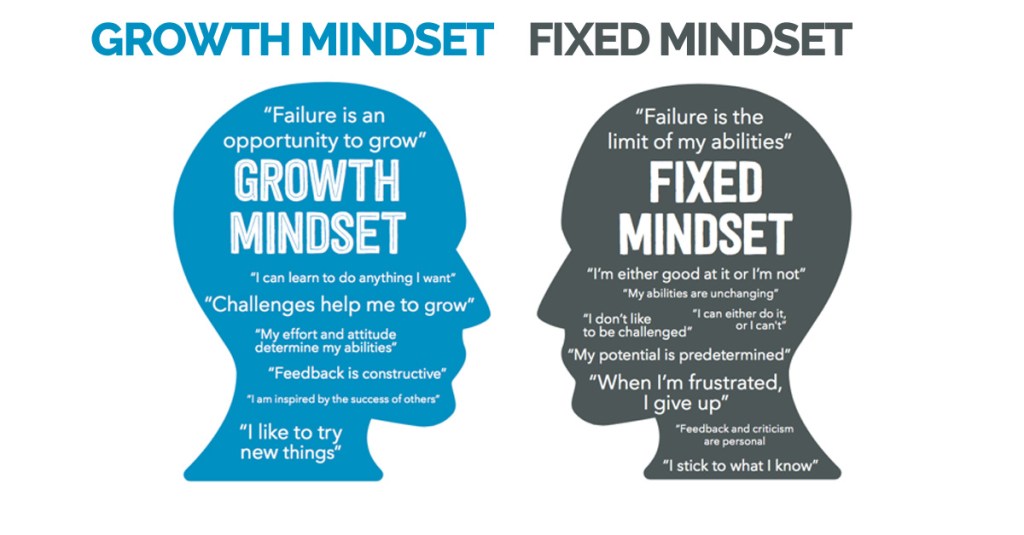
Growth Mindset is a psychological strategy that focuses on how student’s inner dialogue and self-esteem affects their performance. For instance, some students may say to themselves that they are “just not a math person” or “I will never get Math.” Teachers must learn to challenge student’s thinking to be more open and positive towards accomplishing learning objectives. Instead of “I will never get math”, a student can say “I’m not getting it, let’s try another strategy”, “What do I need to understand to accomplish this problem”, “I can be good at Math if I apply myself”. Growth Mindset looks to change student’s inner dialogue from fixed, static, and absolute statements about their ability, to open, flexible, and positive statements (Stern et Al, pg. 30, 2017).
2. Journaling
Journaling is a great beginning of class activity to allow students to access prior knowledge and get motivated for the lesson. As an English/Language Arts teacher, I use journaling as a warm up for my students. I usually have a prompt on the board and I give students 5-10 minutes to answer the prompt. I discuss the prompt afterwards and then dive into my lesson. Journaling can be used in any discipline (Stern et Al, pg. 48, 2017).

3. Divide and Slide (aka Philosophical Chairs)
Divide and Slide, or what I call “Philosophical Chairs”, is a class activity where the teacher makes a state that can be agreed or disagreed with. Students are to line up on a designated side of the room that is agree and another side that is disagree. There is also some space allowed to be unsure which is in the middle of the room. Students align themselves with agree or disagree and then work with other students to make the best argument for their side. They are supposed to draw students who are undecided or make the other side change their minds (Stern et Al, pg. 50, 2017).
4. Gallery Walk
A gallery walk is where the teacher uses poster paper and assigns topics to groups. Groups are supposed to become experts on their concept and teach other students. Groups rotate between stations and students are supposed to write down what they know about a subject and build upon other student responses. This is a great activity to get students moving around the classroom (Stern et Al, pg. 51, 2017).
5. Concept Attainment
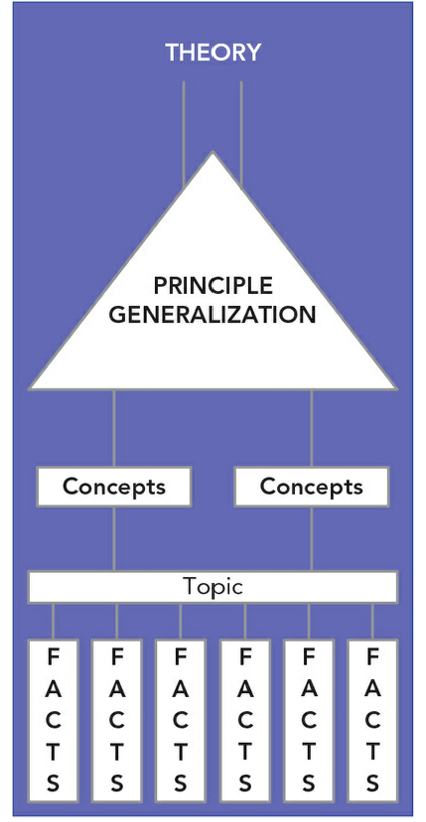
Concept Attainment is a four step process by which students create their own generalizations. The first step is to investigate examples. The second step would be clarify examples and distinguish from non examples. The third step would be to confirm critical attributes. The final step is to reflect and synthesize information (Stern et Al, pg. 53, 2017).
6. The Cycle of Conceptual Inquiry
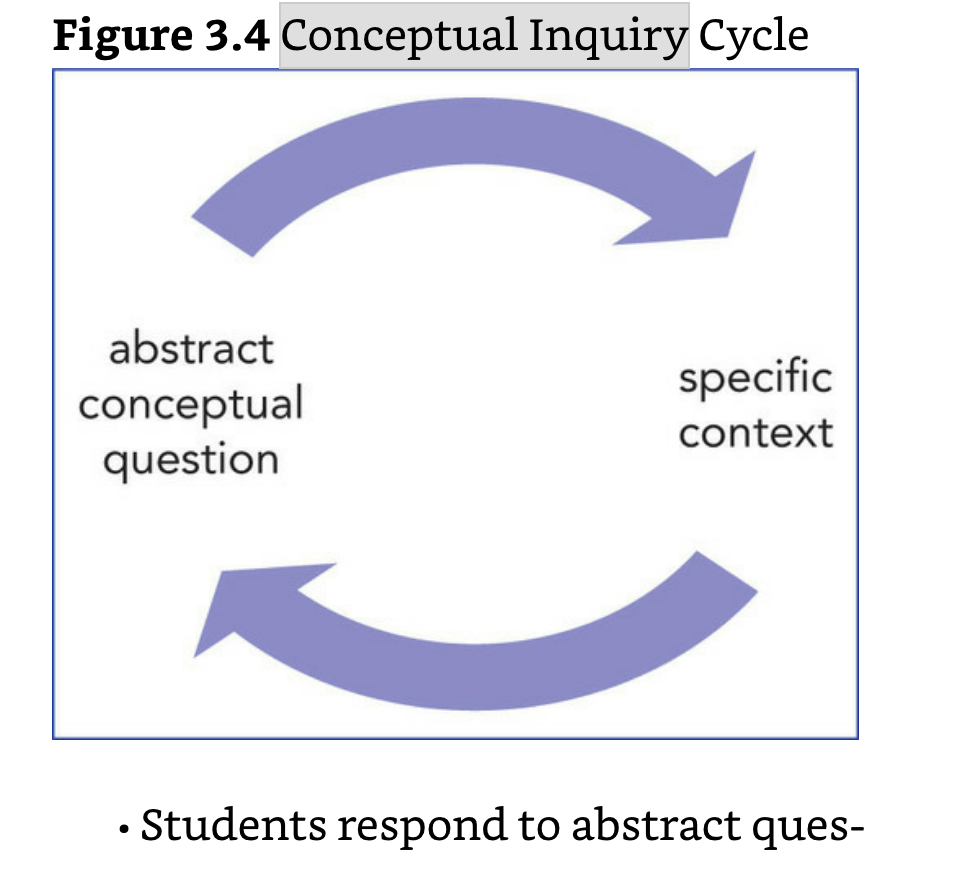
The cycle of conceptual inquiry shows how conceptual questions should be given a specific context. The teacher asks a question in which students are initially confused by. The teacher clarifies by giving a specific example. Students then come up with their own examples, which the teacher negates. Students are allowed to come up with own generalizations (Stern et Al, pg. 59, 2017).
7. Project based learning
Project based learning is different from merely assigning projects in class. Project based learning is when students work on questions or experiments for an extended period of time. Students are encouraged to use critical thinking and problem solving skills to work towards completing a project with the teacher providing scaffolding along the way. Students have an input or choice on how the project is completed and how they should adjust (Stern et Al, pg. 74, 2017).
8. Personalized Learning
Personalized Learning is an approach to student learning that emphasizes giving students the option to study whatever they like, how they like. I find this method to be helpful because students learn at a variety of paces. Some students learn faster than others, some learn slower. In your lesson plan, you should scaffold for the variety of speeds that students learn at and help make connections explicit. For the more intellectually gifted students in the class, you could assign work that would help conduct research (Stern et Al, pg. 83, 2017).
9. Vary your assessment methods
Teachers need to vary assessments methods. Teachers should not use the same assessment repeatedly. As an ELA teacher, I have to use a vary of assessment methods to test for understanding. I like using long form responses as well as essays, and I try to stay away from multiple choice tests as much as possible. Varying assessment methods allows for more diverse insights and data from students (Stern et Al, pg. 107, 2017).

10. Effective feedback
Teachers should provide effective feedback whenever possible. For English/Language Arts teachers, teachers read essays and should give feedback whenever possible. Feedback should not be generic or hasty, but should show that the teacher read the paper, understood the points, and provide feedback to make the paper stronger. Teachers should give personalized feedback wherever possible (Stern et Al, pg. 107, 2017).
11. Use rubrics
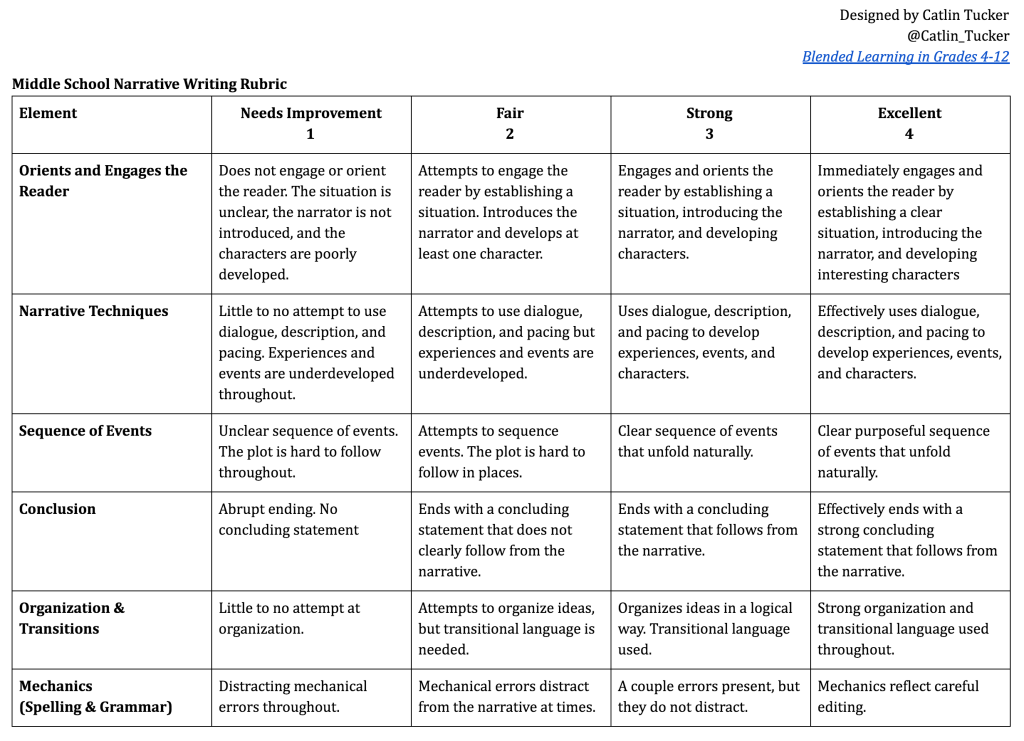
Rubrics are the best way to communicate expectations to students and grades using an objective metric. By using rubrics, students can understand that they need to do to achieve the highest grade possible. The rubric becomes the independent standard by which the teacher grades the assignment. Rubrics communicate what is considered good work and if the student receives that less than expected grade, they can refer to rubric to see what part of the assignment they did not do well on (Stern et Al, pg. 111, 2017).
12. Take steps to Combat low expectations in students
Teachers should combat low expectations in students in various ways. Teachers should reframe student confidence using Growth Mindset to help change student’s self-concept and their ability to achieve. Teachers should question racial stereotypes that presuppose student success for particular populations. Teachers should communicate clear expectations and also hold high expectations for student performance. Teachers should exhibit unconditional positive regard for students and not speak to students in ways that seem dismissive or derisive towards students (Stern et Al, pg. 121, 2017).

Resources
Stern, J. H., Mohnkern, J., & Ferraro, K. F. (2017). Tools for teaching conceptual understanding, secondary: Designing lessons and assessments for deep learning. Thousand Oaks, CA: Corwin, a SAGE Publishing Company.
Top 5 Teaching Resources for ELA Teachers
English Teachers need access to websites and resources to teach language arts effectively. The list below is the top 5 most common resources that are utilized by ELA teachers today that will help ELA teachers provide content and structure their lessons effectively.
Youtube has millions of education channels for whatever unit/novel you are teaching in class. All you have to do is type in your keyword and you will get thousands of videos. For my unit on Animal Farm, I typed in “George Orwell” and “George Orwell Biography” and found a 25 minute biography of George Orwell that covered his youth and the context for each of his novels up till 1984. The video became a centerpiece for my introductory lessons on Animal Farm before we started to read the novel. You should pick a video that is high quality and fits within the time you have for a lesson. Youtube has literally anything you would want for a lesson, just type in what you need and review.
2. Newsela
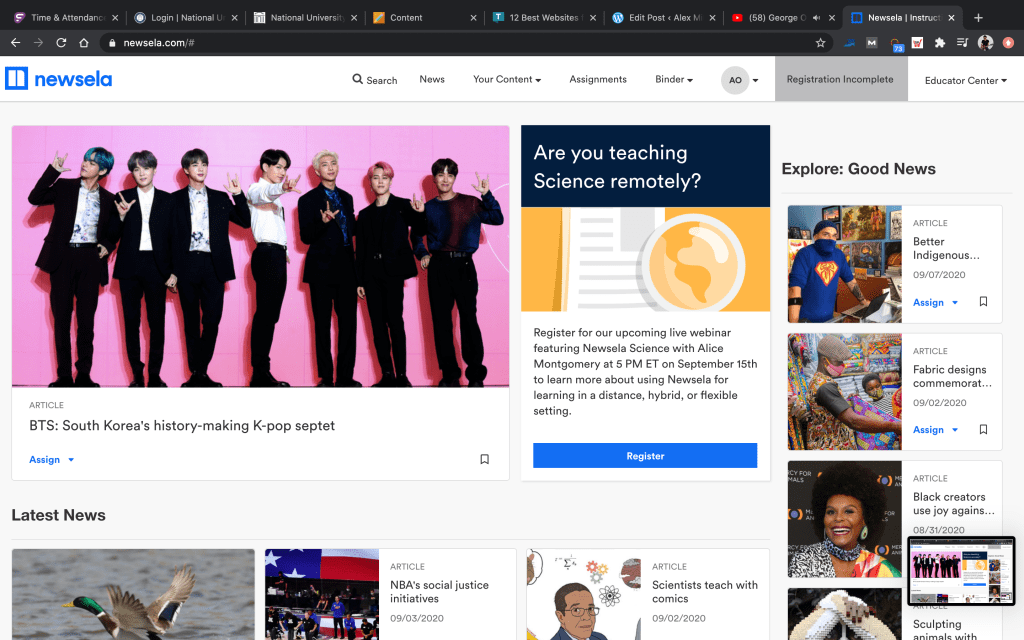
Newsela is a free website that teachers can use to assign electronic articles to students. Teachers can select articles by subject and the articles come with activities, questions, and vocabulary that students can review and answer. Newsela works with well with Google Classroom and can be integrated into any platform. It’s slowly becoming the website for ELA teachers to assign articles from.
3. NoRedInk
NoRedInk is a product that schools/school districts can purchase that provides assignments/exercises in which students have to edit paragraph. I have seen teachers use as an exercise at the beginning of class or assigned on a weekly basis that students have to complete to supplement their work in class. The application is great for helping students improve their editing skills and grammar skills.

3. GoFormatives
GoFormatives is a great website for teachers to create formatives and upload quizzes. Teachers can create a formative quiz on the application or upload a quiz from a google/word document. The website has a variety of analytics to track student progress and is easily synced with Google classroom.

5. PurdueOwl
PurdueOwl is a great resources for teachers to teach students style and formatting for assignments. The website is based out of Purdue University, and contains the definitive guide for formatting of papers, citing, and style. Teachers should direct students to this website as a source and style guide.

What are you some resources that you use as an English teacher? Leave a comment
ITL 528 Week One Learning and Teaching Style Inventory
According to a teaching style survey administered by North Carolina State University administered by Felder and Solomon, I scored high as a reflective, intuitive, verbal, and global learner.
In the score dimensions, learners tend to be either active or reflective. Active learners are those who like to learn as they do and learn hands on, whereas reflective learners like thinking abstractly about what is being discussed. Scores are also measured in terms of sensing or intuitive. Sensing learners are those who like to use their senses to learn whereas intuitive learners like to use emotion and feelings to discern content. Another dimension was a scale of visual or verbal. Visual learners like pictures and other visual mediums to learn new knowledge. Verbal learners like to listen to others and go off of written and verbal directions. The final dimension is Sequential vs. Global. Sequential learners like to learn things as part of a process in terms of linear direction. Global Learners like to think about things on a larger scale.
I also took the Kisa Personality test, which was a condensed version of the Meyers-Briggs Personality test. I was evaluated as an ENFJ (Extroverted, Intuitive, Feeling, Judging). I took this test in my undergraduate and scored similarly. According to research, ENFJ is one of the least common personality types and is the common personality profile for politicians and leaders (Bill Clinton and Tony Blair are both ENFJs).
Taking these assessments has led to me think about my teaching practice and how to tailor my instruction for students. As a student, I learned in a specific way. My learning style was a verbal, reading/writing student, which was the least common way most students learn. As I have come to learn, most students are Visual/Kinesthetic learners. In my methods courses, we were taught how to design lessons using the Universal Design for Learning which made teacher candidates think about how incorporate all styles of learning. I can’t just model the things that I liked, I have to incorporate all learning styles.
I decided to become a teacher because I am very passionate about art and politics. I studied a wide variety of humanities and social science subjects. I like to talk about art, philosophy, and politics with students. These disciplines are reading and writing intensive. As a teacher, I need to find a way to make my instruction more visual and kinesthetic so I can appeal to more learners and help students retain content than to lecture and discuss readings.
Archive: Alex Milledge PHIL 315 paper “The Case for Open Borders”
Here is a paper from 2014 written by Alex Milledge making a case for an Open Border policy for CSUF PHIL 315
Alex Milledge “Paterno’s Legacy Blemished by ‘Horseplay'” Archive: November 16, 2011
Here is an editorial from 2011 written by Alex Milledge about the Jerry Sandusky Scandal at Penn State
Alex Milledge ‘Moneyball’ Brad Pitt Review Archive: September 24, 2011
Here is a review written by Alex Milledge about the 2011 release of “Moneyball” starring Brad Pitt.
Alex Milledge Fullerton College Women’s Basketball Preview Archive: November 2, 2011
Here is an article written by Alex Milledge as a preview to the Fullerton College Women’s Basketball season in 2011
Alex Milledge Fullerton College Football Preview “High Hopes for Hornet Football” Archive: September 3, 2011
Here is an article written by Alex Milledge as a preview for the Fullerton College Football season in 2011.
 Alex Milledge Teacher Blog